Markham Commercial Metal Roof Coatings for Office Spaces
Enhance Performance: The Complete Resource for Metal Roof Coatings for Commercial Buildings
Metal roof coatings play a critical role in boosting the resilience and service life of commercial rooftops. These coatings provide protection from environmental factors such as UV rays and moisture, ensuring long-term efficiency. Knowing the range of available options and their particular benefits is important. Moreover, understanding proper application procedures and maintenance strategies can heavily affect overall results. Still, numerous property managers miss critical elements when picking coatings, causing preventable financial setbacks. What key aspects should they examine to fully optimize their investment?
What Are Metal Roof Coatings and Why Do You Need Them?
Metal roof coatings serve as a protective layer for commercial roofing systems, enhancing durability and longevity. Such coatings, typically formulated from materials like acrylic, silicone, or polyurethane, establish a seamless barrier that defends against environmental factors such as UV rays, moisture, and extreme temperatures. By applying a metal roof coating, property owners can substantially minimize the likelihood of corrosion, rust, and leaks, that can compromise the overall structural integrity of the roof.
In addition, these protective coatings boost energy performance by reflecting sunlight, thereby reducing energy costs for cooling. The installation process is fairly simple, often allowing for little to no disruption to ongoing business activities. Additionally, these coatings can increase the longevity of existing roofing systems, making them a highly cost-effective option for ongoing maintenance needs. In conclusion, metal roof coatings not only protect but also enhance the overall performance of commercial roofing, positioning them as an critical factor for maintenance and property management planning.
Major Benefits of Metal Roof Coatings for Long-Lasting Efficiency
Using metal roof coatings offers many benefits that greatly enhance both durability and performance for commercial buildings. An important benefit is the defense against environmental hazards, such as UV radiation, rain, and wind, which can result in untimely damage. This defensive coating aids in lengthening the roof's service life, reducing the need for frequent repairs or replacements.
In addition, metal roof coatings improve energy efficiency by deflecting sunlight, thereby decreasing cooling costs. This reflective property aids in preserving a steady indoor temperature, fostering a more comfortable environment.
Moreover, such coatings can minimize the potential for rust and corrosion, additionally protecting the foundational strength of the roof. By closing minor leaks and openings, they strengthen resistance to water, stopping harm caused by water penetration. Overall, the use of metal roof coatings not only guarantees durability but also promotes energy savings, rendering them a smart option for business property owners seeking longevity and operational efficiency.
Finding the Right Metal Roof Coating for Maximum Durability
Picking the right coating for your metal roof is essential for maximizing durability and effectiveness. Several factors affect this selection, including environmental factors, the slope of the roof, and specific building requirements. Superior coatings, such as polyurethane, silicone, or acrylic, offer unique properties. Silicone roof coatings offer exceptional UV resistance and waterproofing, making them the top choice for regions that experience heavy rainfall. Acrylic coatings are valued for their energy efficiency and reflectivity, which can decrease energy costs for cooling. Polyurethane options provide superior durability and abrasion resistance, ideal for areas with significant foot traffic.
Furthermore, thorough surface preparation is critical for strong adhesion and durable performance. It is recommended to choose coatings with a demonstrated history of success in commercial applications. Confirming compatibility with the existing roofing system will also enhance the lifespan of the roof. Ultimately, the most suitable option will align with specific environmental demands and performance expectations, providing a reliable, economically sound solution for professional commercial metal roofing applications.
A Comparison of Metal Roof Coatings: Which Option Fits Your Needs?
When choosing a roof coating for metal surfaces, knowing the key differences between acrylic and silicone options is crucial. Acrylic coatings are known for their affordability and ease of application, while silicone coatings deliver enhanced durability and excellent protection against moisture. Evaluating these characteristics can help determine the best fit for specific roofing needs.
Benefits of Acrylic Coatings
Acrylic coatings deliver numerous advantages that make them a preferred option for commercial metal roofs. One notable benefit is their superior UV resistance, which works to preserve the roof's durability and aesthetics over time. Being water-based, these coatings, making them eco-friendly and simple to apply. Additionally, acrylic coatings are exceptionally flexible, enabling them to expand and contract with temperature changes without breaking down. Their cost-effectiveness adds to their popularity, offering reliable protection at a reasonable cost. Beyond that, acrylic coatings are offered in a wide range of colors, empowering building owners to boost visual appeal while guaranteeing effective performance. Collectively, these qualities establish acrylic coatings as a dependable choice for those seeking durable and efficient metal roof solutions.
Silicone Coatings Benefits
A wide range of advantages make silicone coatings an ideal solution for commercial metal roofs. These coatings provide superior resistance to ultraviolet rays and harsh weather, extending the lifespan of the roof. This flexibility supports effective thermal movement, minimizing the risk of cracking. In addition, silicone coatings are remarkably reflective, promoting energy efficiency by reducing cooling costs. Such coatings also exhibit excellent adhesion properties, guaranteeing a strong attachment to the metal substrate. Furthermore, silicone coatings are proven resistant to mold and mildew development, supporting improved air quality indoors. Care and maintenance become straightforward, as these coatings are easy to clean and recoat. In summary, silicone coatings provide a long-lasting and economical option for defending commercial metal roofing systems against environmental threats.
How to Apply Roof Coatings
The application of roof coatings requires a series of essential steps to secure lasting results and optimal performance. First and foremost, proper surface preparation is essential to achieve ideal adhesion, accompanied by particular application methods that optimize coverage. Finally, comprehending the curing and drying procedure is crucial for the extended lifespan of the coating.
Core Surface Preparation Principles
Thorough surface preparation is fundamental to the successful application of roof coatings. This process begins with a thorough inspection to locate any damage, rust, or contaminants on the metal roof. Thoroughly cleaning the surface is crucial; employing a pressure washer or suitable cleaning solution eliminates dirt, grease, and old coatings that could compromise adhesion. Following the cleaning process, the roof should be left to dry entirely. Subsequently, treating any rust spots with an appropriate rust-inhibiting primer aids in preventing further deterioration. Additionally, repairs to any seams or flashing should be conducted to guarantee a uniform surface. Finally, confirming that the surface is free from moisture and contaminants will enhance the longevity and effectiveness of the applied roof coatings.
Application Methods Overview
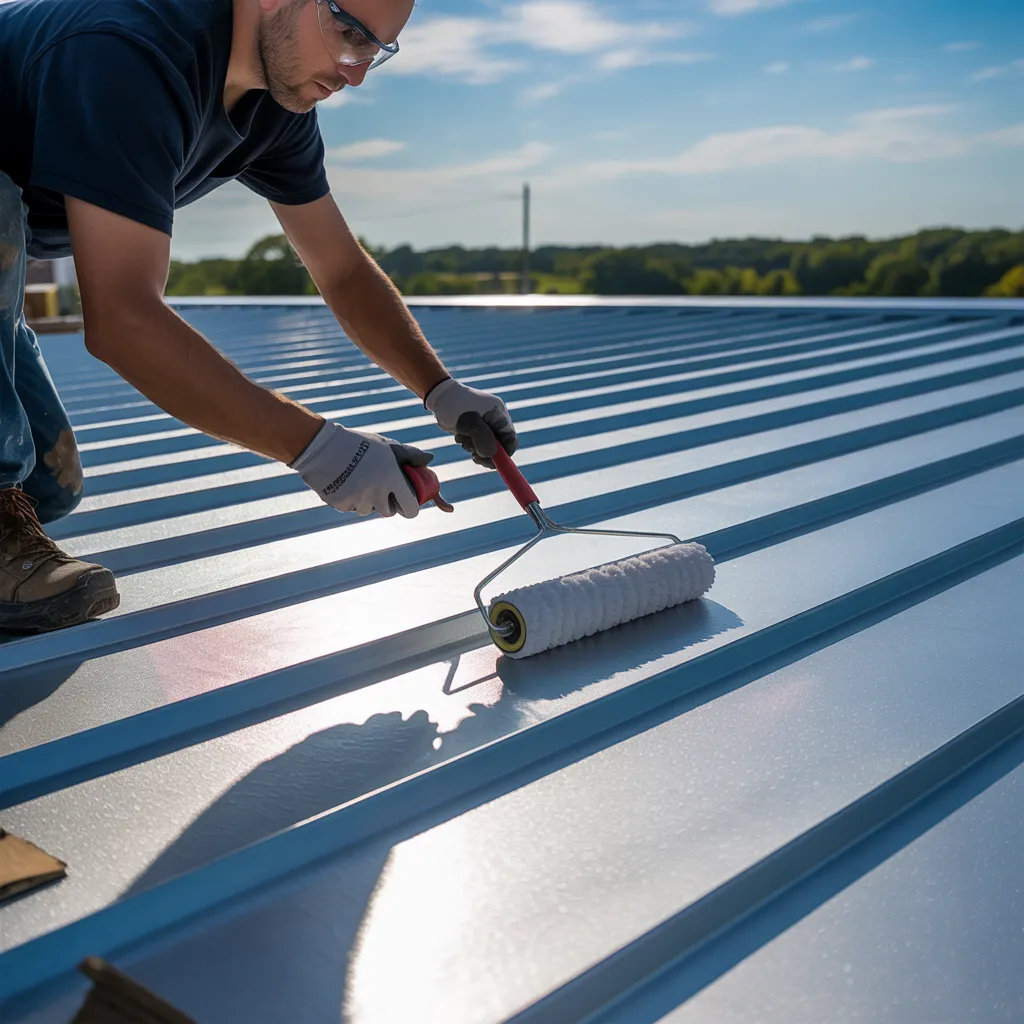
Properly executing the application of roof coatings demands a structured approach to guarantee peak performance and longevity. Initially, make sure the surface is clear of contaminants, dry, and clean, as this improves adhesion. Next, select the correct coating type based on the metal roof's specific requirements. It is recommended to use a primer if necessary, strengthening the adhesion process. When applying the coating, utilize consistent strokes with a roller, brush, or sprayer, ensuring even distribution. Focus particularly on seams and edges, where water infiltration is most likely. Several thin layers are typically preferred over one thick coat, as they allow for better adhesion and drying. Finally, confirm that all safety precautions are followed throughout the entire application procedure.
Curing and Drying Process
Curing and drying represent essential stages in the application of roof coatings, influencing both performance and durability. During the curing process, chemical reactions occur that bond the coating to the substrate, strengthening adhesion and resilience to environmental conditions. This stage typically requires ideal temperature and humidity levels, which need to be tracked diligently to confirm thorough curing.
Evaporation, in contrast, describes the vaporization of solvents, allowing the application to harden. Variables such as ventilation, application thickness, and environmental conditions can considerably influence the drying duration. It is important to refrain from contact with moisture or foot traffic during all stages to avoid imperfections. Following manufacturer guidelines guarantees the check article longevity and effectiveness of the roof coating.
Helpful Tips to Maximize the Longevity of Your Metal Roof Coating
Upkeeping a metal roof coating is vital for optimizing its lifespan and performance. Routine inspections are a key factor; property owners should watch for evidence of damage, such as discoloration, peeling, or cracking. Regularly cleaning the coating helps avoid the accumulation of dirt and debris, which can hold moisture and result in corrosion. Applying a soft brush or gentle pressure wash with mild detergent is suggested for effective cleaning without damaging the coating.